I walked out of that office knowing one thing.
My husband, my father, and possibly the rest of my family had been hiding something far bigger than I imagined.
For the first time in years, I stopped feeling helpless.
I asked Mrs. Parker to explain exactly what my grandmother had left me and what my father’s signature was doing on those documents.
She carefully reviewed the trust.
The house belonged to the trust, and I was its sole beneficiary. My parents had been allowed to live there under a written occupancy agreement, but they had no authority to claim ownership or transfer the property.
The document claiming I had received my inheritance was especially troubling.
Mrs. Parker confirmed that the signature did not match the documents I had previously signed. She advised me not to confront anyone until the records had been preserved and her office had reviewed the matter formally.
Then she showed me something else.
A few months earlier, my father had requested permission to refinance the property. When the request was rejected, he had contacted Grant to ask whether there was another way to access the trust’s assets.
Grant had been asking questions about my inheritance long before I discovered his affair.
I felt sick.
The affair hadn’t necessarily been connected to the inheritance, but the timing of everything was too suspicious to ignore.
I called my friend Melissa, who helped me find a family-law attorney. We arranged temporary accommodation for the children and began documenting our expenses, Grant’s messages, and the financial records I could lawfully access.
My attorney also contacted Mrs. Parker so the trust documents could be handled through the proper legal process.
Then I received a message from Grant.
“Where are you? We need to talk. Your father says you’re making trouble about the house.”
I stared at the screen.
He knew.
I didn’t reply.
Instead, I sent the message to my attorney.
Over the next few days, the truth became clearer. My father had been trying to gain control over the property, while Grant had been exploring whether my inheritance could be used as financial security for a business venture.
Neither had my permission.
And neither had the right to make decisions on my behalf.
My attorney sent formal notices requiring the disputed documents to be preserved and requesting an explanation for the unauthorized signature. The trust’s legal protections remained in place while the matter was reviewed.
Then my mother called.
Her voice was trembling.
“Your father says you’re trying to take our home away.”
I closed my eyes.
“Mom, Grandma left that property to protect me and my children. You knew that.”
There was a long silence.
Finally, she whispered, “Your father said he was only borrowing against it. He promised everything would be put back.”
“Did you know he signed my name?”
“I didn’t know he had done that.”
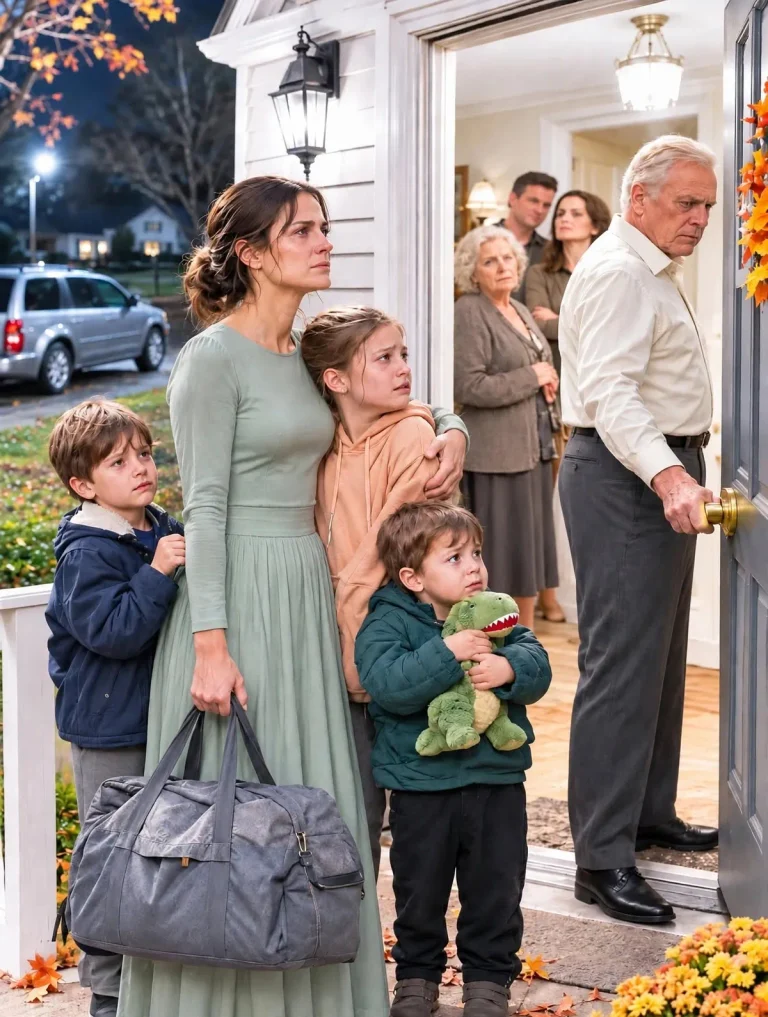
I wanted to believe her, but I couldn’t pretend the night at their front door hadn’t happened.
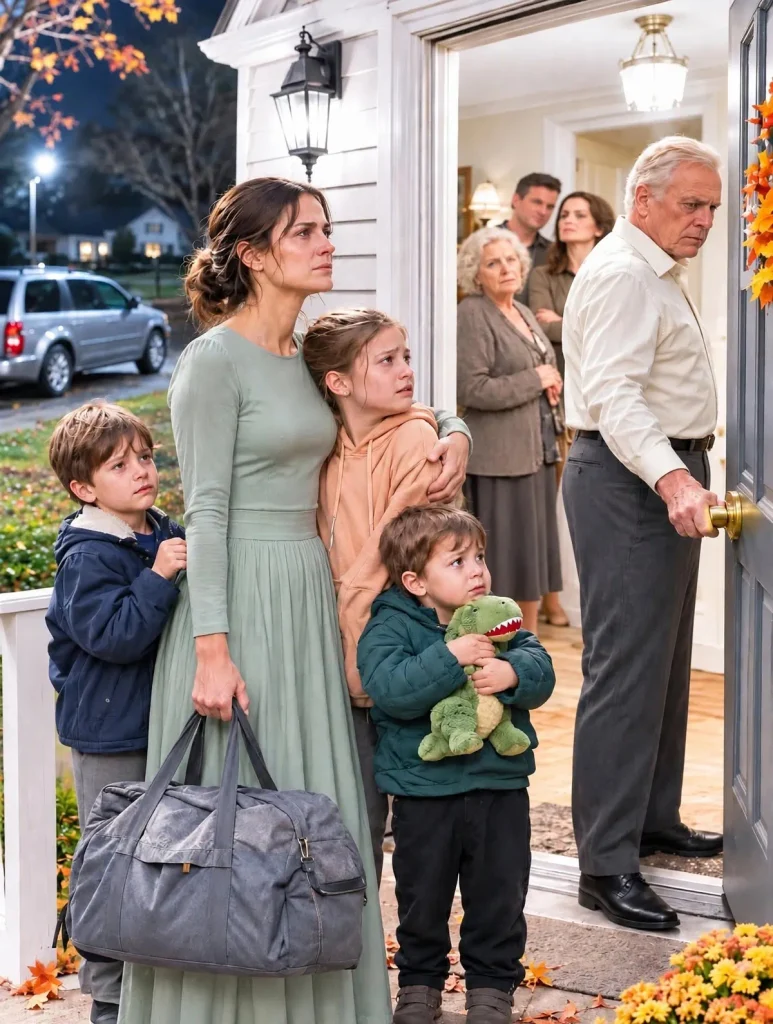
“Mom, I came to you with three children and nowhere to sleep. You watched Dad close the door.”
She began crying.
“I know.”
“No, you don’t. Holly asked me if Grandpa still loved her.”
My voice broke.
“She still doesn’t understand why he wouldn’t let us inside.”
My mother had no answer.
A week later, my father finally called.
He didn’t apologize.
He said I was being influenced by lawyers and that family matters should stay within the family.
I replied quietly, “You had the opportunity to treat us like family when we were standing outside your door.”
Then I ended the call.
The legal process continued. The disputed signature was referred for independent examination, and the trust’s records were secured. Grant’s attempts to use my inheritance were also brought to the attention of the appropriate professionals.
Meanwhile, I began rebuilding our lives.
I found a modest rental house near Holly’s school. Mason chose the bedroom closest to his little brother, and Eli insisted on keeping his dinosaur beside him every night.
It wasn’t the life I’d imagined for us.
But it was peaceful.
Months later, my father sent a letter through my attorney. He finally admitted that he had made decisions about the property without my permission. He asked me to forgive him and said he wanted to see the children.
I read the letter twice.
I didn’t throw it away, but I didn’t rush to answer either.
Forgiveness wasn’t something he could demand simply because he regretted the consequences.
As for Grant, our marriage moved into formal separation proceedings. I stopped trying to understand how someone could betray his family so completely and focused instead on making sure the children had stability and support.
One evening, Holly came into the kitchen while I was preparing dinner.
“Mommy, are we ever going to see Grandma and Grandpa again?”
I put down the spoon and knelt beside her.
“Maybe someday, sweetheart. But seeing someone doesn’t mean we have to let them hurt us.”
She thought about that for a moment.
Then she hugged me.
“I’m glad we have our own house.”
I held her tightly.
“So am I.”
That night, after all three children were asleep, I opened Grandma’s letter again.
One sentence stood out:
“Never let anyone convince you that being loved means accepting whatever they do to you.”
I finally understood why she had created the trust.
She hadn’t simply left me a house or money.
She had given me the chance to stand on my own feet when the people I trusted most failed me.
My father once believed shutting the door would send me running back to my husband.
Grant believed I would be too frightened to challenge him.
They were both wrong.
I didn’t need revenge. I needed safety, truth, and a future for my children.
And I was finally building all three.
Sometimes the greatest turning point in your life isn’t when someone opens a door for you.
It’s when you discover you have the strength to walk away from the people who keep closing theirs.